The paper lemon belongs in the marketing conversation
A paper lemon at a frozen-treat shop is a small object carrying a larger relationship. It gives the customer something visible to participate in, gives the team a conversation to have and connects an ordinary visit to a cause outside the store.
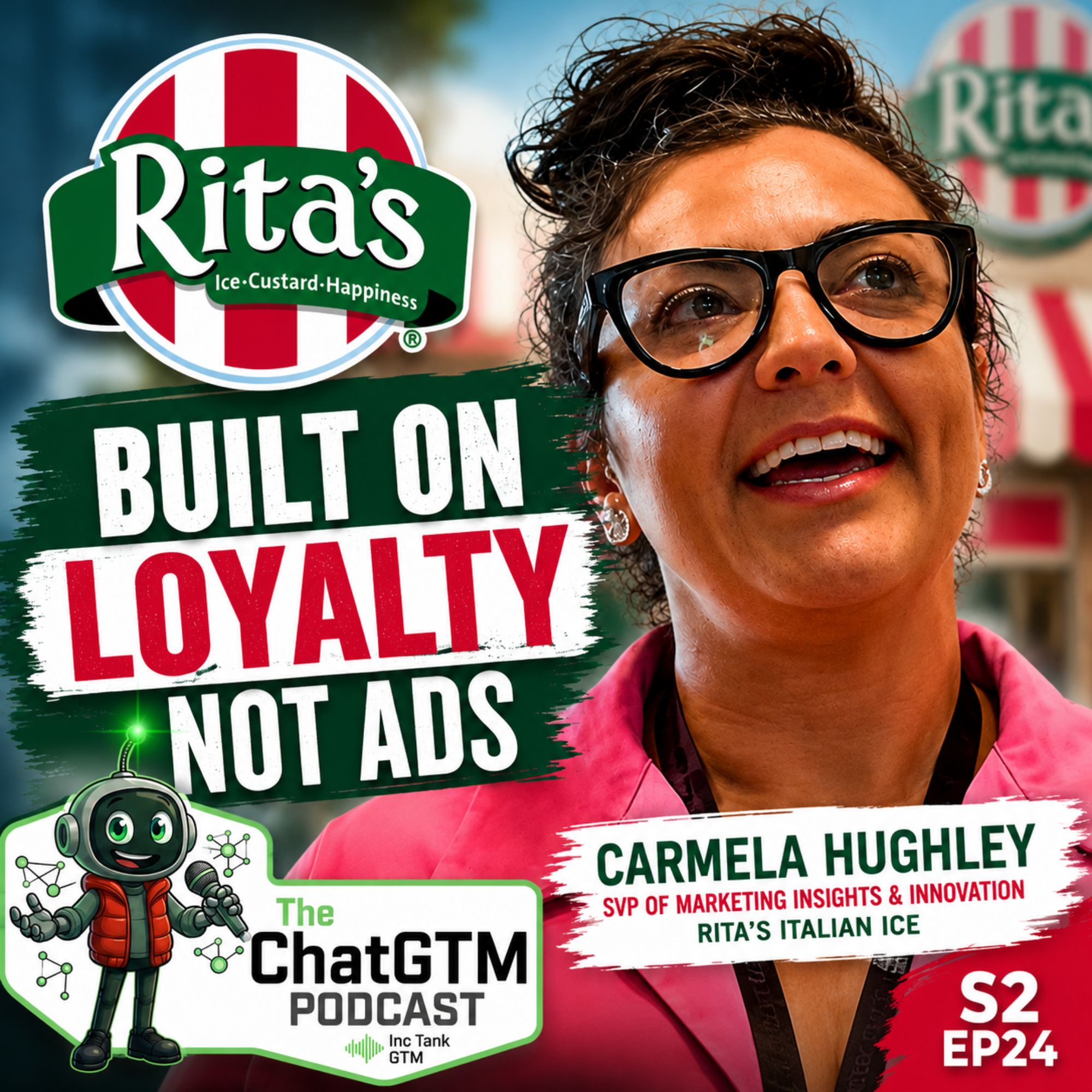
Carmela Hughley, Rita's Italian Ice marketing leader, discusses that example with Michael Beck and Chad Horn on ChatGTM. The brand's work with Alex's Lemonade Stand and the Eagles Autism Foundation sits alongside the familiar flavors, local franchisees and family visits that shape how people experience Rita's.
Hughley resists reducing that work to a clever sales device. She describes community support as part of what the organization believes it should do. That distinction matters. Customers may encounter the campaign in a shop, but the people and organizations receiving support are more than material for a brand story.
Make participation something a team can deliver
Community work becomes tangible through local execution. Hughley describes franchisees sharing the message, participating in fundraising and being recognized for their contributions. The brand supplies direction, while the people operating each shop bring the activity into the neighborhood.
She also discusses the work behind the Rita's Golf Classic: organizing participants, coordinating partners and preparing an event the team wants to deliver well. The cause may be emotionally compelling, but the work still needs owners, preparation and follow-through.
For another business, that suggests choosing a commitment the team can sustain. Define how customers can participate, how employees should explain it and how the organization will account for its contribution. A complicated activation that nobody at the counter understands creates distance from the very community it hopes to involve.
Hughley also leaves room for people who cannot contribute financially. Gratitude, kindness and other forms of support still matter. That makes participation an invitation, rather than another moment in which a customer feels assessed at checkout.
Nostalgia needs a reason to return
Hughley regularly meets people who connect Rita's with a particular stage of their lives. They remember visits with parents or grandparents and now bring families of their own. Familiar colors and flavors carry those memories before a new campaign says anything at all.
That inheritance creates both an asset and a responsibility. The business has to preserve enough of the experience for the memory to feel true while giving a new generation something of its own to enjoy. Hughley discusses product development across familiar favorites and newer flavor preferences.
Her own preference for lemon illustrates how specific the attachment can be. The appeal is sensory and personal, not an abstract claim about brand affection. An operator trying to understand that attachment should listen for the actual ritual: who came along, what they ordered and why that visit stayed with them.
Those details can inform creative work without forcing every customer into the same story. One guest is revisiting a childhood favorite. Another is discovering a new flavor with friends. A healthy brand can make room for both.
Count behavior without inventing a causal story
The hosts press Hughley on how she measures the enthusiasm she hears. She points to app activity, email, website traffic and social engagement, alongside sales. Different channels provide different views of who is paying attention and what prompts a response.
When the discussion turns to charitable activity and business performance, the conversation does not establish a clean calculation in which a donation produces a particular amount of revenue. The programs are recurring, the relationships are longstanding and several things influence a visit. That is a reason to measure carefully.
A useful review can distinguish participation, contribution, engagement and commercial results. Each answers a different question. Keeping them separate allows the business to describe what happened without claiming every favorable movement proves the campaign caused it.
Let the next test improve the experience
Hughley describes creative work as experimentation with agency partners and internal teams. Some ideas deserve expansion. Some need adjustment. Others should be retired. She also connects marketing with operations and technology, including the accuracy and usefulness of local web pages.
The practical lesson is that the brand experience continues after a person likes a post. They may look for a location, check its hours, visit a shop and speak to an employee. The campaign and those ordinary details need to agree.
Community affection gives a brand a valuable starting point. Rita's conversation with its guests has been built through repeated occasions, recognizable products and people showing up locally. The next marketing idea has to join that relationship, then give the neighborhood another reason to keep it.