Thirty guests should not require a spreadsheet
Someone ordering lunch for a group has a fairly clear goal: feed everyone, spend an acceptable amount and avoid becoming the person who forgot the vegetarians. A catering menu can turn that simple assignment into a sequence of calculations. How many people does a quart serve? How many sides belong with the mains? Does the package account for children?
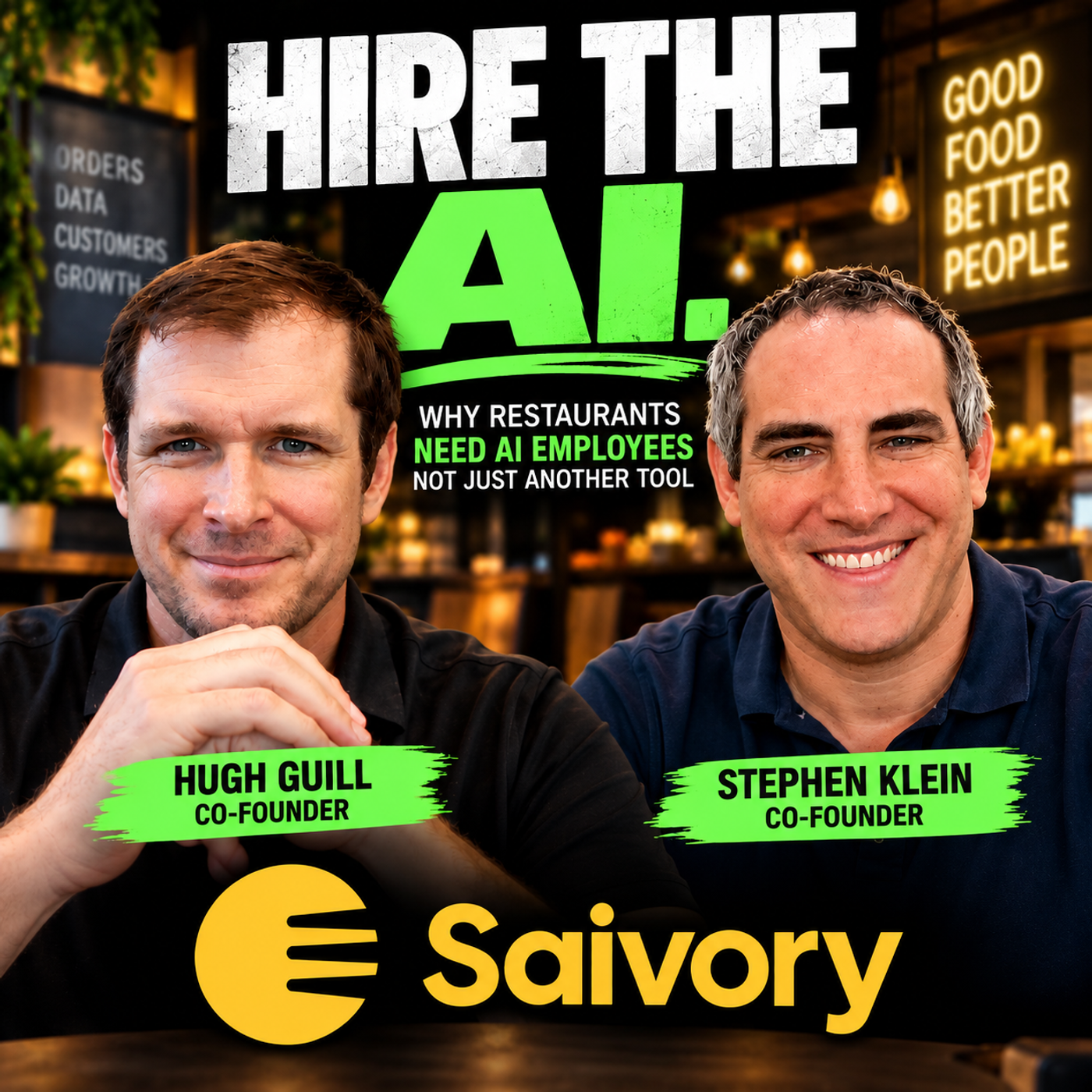
Hugh Guill describes that problem on ChatGTM with Stephen Klein. Their conversation connects Guill's experience with Fajita Pete's to the development of Saivory, bringing restaurant operations and software expertise to the same table. The early challenge was to make a catering order easier to assemble.
Their example begins with an ordinary description of an event, including the number of guests and delivery timing. The system proposes a basket based on the menu and ordering history, then lets the customer adjust it. The useful part is the head start: a person can review a concrete order instead of building the entire meal through a long series of menu decisions.
Start with what the customer is trying to accomplish
Guill explains that popular menu combinations give the recommendation a starting point. A customer who specifies a preference should shape the result. Someone who is less certain benefits from a sensible first suggestion. Different occasions can call for different baskets, even when the restaurant is the same.
This is a practical way to assess an AI ordering experience. The interface should reduce uncertainty while preserving the customer's ability to review and correct the order. For a catering buyer, that means making quantities, items, price and requested accommodations understandable before checkout. A confident-looking basket is only useful if the customer can determine whether it fits the event.
Klein emphasizes the value of working with someone who has lived the operating problem. Software experience helps a team build. Restaurant experience helps it decide what deserves to be built and recognize when an apparently elegant idea creates another burden. He describes Guill's operator perspective as a recurring influence on product decisions.
A direct order is part of a longer relationship
For Guill, simpler ordering connects to a larger concern: how much of the customer relationship a restaurant can retain. He describes the effort that goes into food preparation and the frustration of having limited ability to contact the person who enjoyed the meal when an intermediary controls that relationship.
He advocates improving the restaurant's own online experience and building a customer list through an appropriate opt-in. The list then needs useful communication: a relevant occasion, an offer that makes sense and a clear reason to order again. Collecting more addresses, by itself, does not produce repeat business.
Guill describes a shift toward online ordering at Fajita Pete's as work that took years. He talks about testing offers, watching email performance and continuing to optimize. That is an important part of the story alongside the technology. The improvement was supported by ongoing operating and marketing practices, rather than a single installation.
A sensible starting point for another restaurant is to walk through its existing site as a first-time catering customer. Find the menu, assemble an order and examine the confirmation. Then consider what useful follow-up the customer has agreed to receive. Fixing friction in that journey may be more valuable than adding another disconnected tool.
Measure the sale you keep
The guests return repeatedly to the difference between generating orders and improving the business. Acquisition costs, fees and the cost of serving an order affect what the restaurant retains. A campaign can look energetic while leaving the operator with an unattractive result.
Guill wants reporting tied to the restaurant's own accounts so the team can inspect performance directly. Klein describes a role for AI in bringing information together and shortening the time between analysis and action. Their discussion presents an approach and experiences with their own work, not a guarantee that an agent will improve every restaurant's returns.
They also bring different emphases to the staffing question. Guill focuses on reducing outside costs. Klein says he does not expect many brands to eliminate their teams or agencies and instead describes helping those people concentrate on strategic work. Readers evaluating the approach should keep that distinction intact.
For an operator testing an agent, define a narrow job and its measures before expanding access. Compare the recommendation with the underlying data, review proposed changes and assess the resulting orders and costs. Faster decisions are valuable when the team can still explain why it made them.
The tortillas still have to be in the bag
Late in the conversation, Guill offers a reminder that grounds the entire technology discussion: get the food right and include the tortillas. Customers have other places to eat. The ordering experience cannot compensate indefinitely for an incomplete meal.
That gives the episode a useful sequence. Make the purchase easier. Deliver the order accurately. Earn permission to stay in touch. Use the information to improve the next experience. Each step supports the next, and each still requires somebody to pay attention.
A well-built system can relieve the customer of menu arithmetic and give the restaurant better information. It should leave the team with more capacity to do the work that brought the customer there in the first place.