Forty-seven accounts and a promise to consult
A salesperson can be told to act like a consultant while spending the day trying to keep up with orders. The job description sounds thoughtful. The calendar tells a different story. With dozens of accounts to cover, there may be little time left to ask a restaurant owner what is changing in the business, much less help work through the answer.
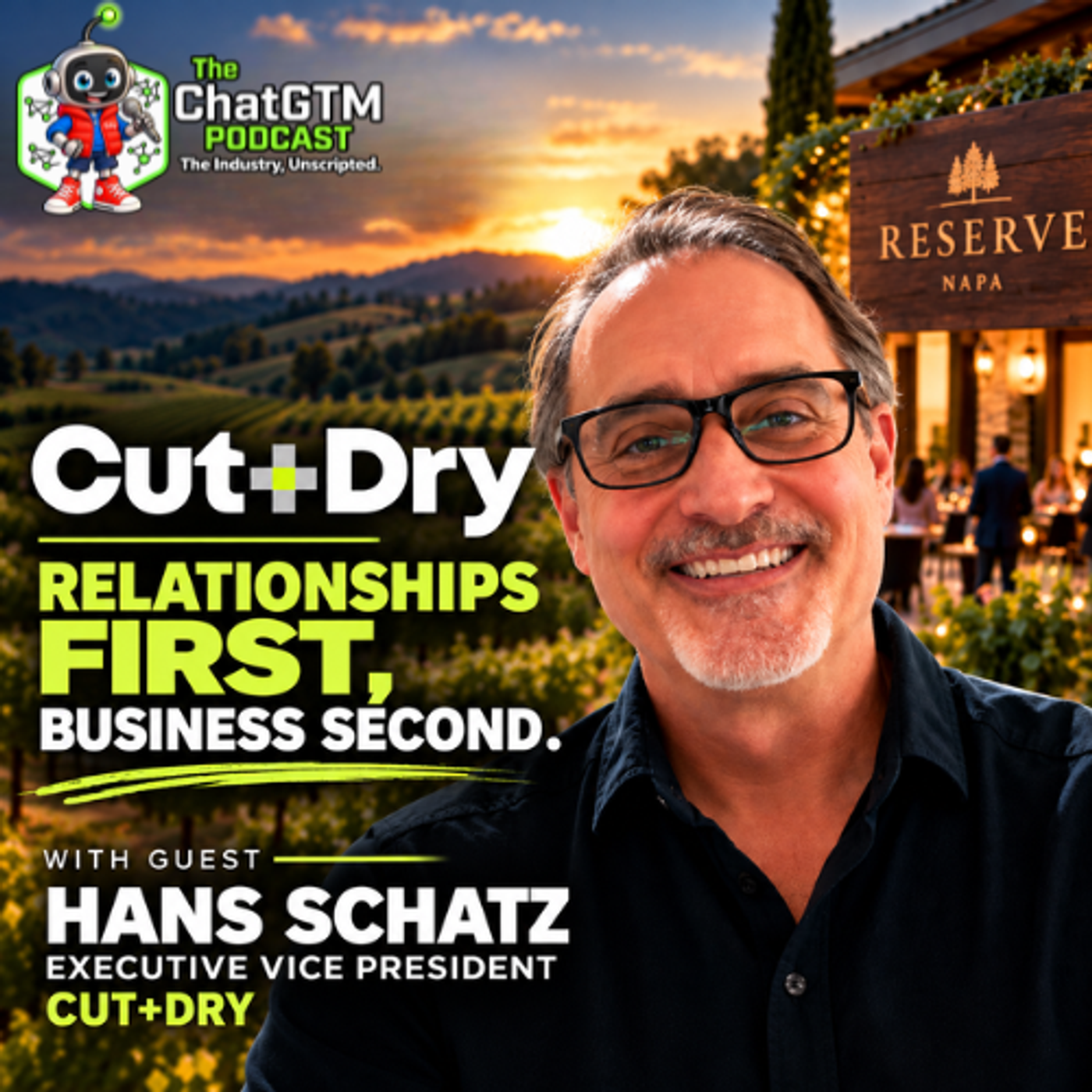
Hans Schatz, executive vice president of Cut+Dry, brings that tension into his ChatGTM conversation with Beck and Chad. He describes the pressure on foodservice representatives who are expected to advise customers while racing between accounts. His argument for digital ordering starts with what a rep could do if taking the order stopped consuming so much of the relationship.
That is a more demanding ambition than moving a transaction onto a screen. The time saved has to become useful time. A rep needs a reason, the information and the permission to spend it differently. Otherwise, the organization has improved order entry and left the old job largely intact.
An intelligent answer needs recognizable ingredients
Before a distributor can do much with its data, it needs to know what the data describes. Schatz uses a chicken tender to illustrate a surprisingly ordinary obstacle: different distributors can describe the same product differently. Size, preparation and other details may be scattered across inconsistent product descriptions. Search becomes harder before anyone has asked artificial intelligence to help.
He contrasts that experience with shopping online for a specific kind of shoe. Consumers expect useful filters and recognizable product attributes. Foodservice buyers have practical reasons to expect comparable clarity. An operator looking for a substitute needs to understand what makes the replacement suitable, rather than merely find something with a similar name.
Schatz describes Cut+Dry's work organizing product information and discusses Yes Chef AI, which he says was in beta at the time of the interview. His examples include asking what a customer bought last week but has not bought this week, or which accounts are buying less. These are the capabilities and development status he describes in the conversation, not independent tests of the product.
For a distributor, the practical question is whether an answer helps someone take a better next step. A missing order might indicate a substitution, a change in demand or a customer drifting away. The useful work begins when a person follows up. A dashboard cannot hear the hesitation in a customer's voice.
Change the work after you change the tool
Schatz welcomes a system taking the order if that lets the salesperson do more for the customer. He also acknowledges that the shift requires a change in thinking, strategy and activity. A distributor cannot simply install an ordering platform and assume that everyone now knows how to build a more valuable customer conversation.
Independent distributors bring operating knowledge and relationships built over years, sometimes generations. They also face the demands of moving cases, managing warehouse capacity and protecting margins. Technology has to work inside that reality. Treating experience as an obstacle is a poor opening move when asking people to change how they earn a living.
One practical application is to define the work that should replace routine order capture before making the change. Could a rep review a customer's purchasing pattern, discuss a menu problem or help identify an appropriate product? Make that expectation specific enough to coach. Then ask whether the new process actually leaves room for it. More account activity is not automatically more help.
The same discipline belongs in product development. Schatz describes a mix of distributor feedback, internal experience and outside partners shaping the roadmap, including plans for a distributor advisory council. Broadline and specialty businesses do not all need the same thing. Listening carefully can prevent a team from building an impressive answer to a question its customers never asked.
Relationships need somewhere to happen
The conversation broadens from software to showing up. Schatz's phrase, "relationships first, business second," describes an approach to participating in the industry. People need opportunities to meet, listen and become useful to one another before every interaction carries a commercial request.
He discusses the plans for RESERVE, Cut+Dry's gathering in Napa Valley, as an expression of that approach. At the time of recording, the event was still ahead. He describes focused sessions, time for conversation and a setting intended to make distributor guests feel valued. Those are the intentions discussed in the episode, rather than a retrospective claim about what the event achieved.
There is a relationship behind this interview worth making clear, too. Beck and Chad discuss Inc Tank's previous work on websites for Cut+Dry distributor partners and their involvement supporting RESERVE. That context belongs alongside the discussion of the company and its approach to community.
The useful connection between the technology discussion and the gathering is time. In both cases, the goal is to make room for a conversation that hurried work can squeeze out. Software may remove a task. An event may put the right people in the same room. Neither can do the listening for them.
Measure what the breathing room makes possible
The episode resists a neat choice between technology and relationships. Schatz recognizes the importance of the systems a distributor needs to operate. He also keeps returning to the people those systems should help. An experienced representative with usable information and time to act can bring something to an account that an order confirmation cannot.
For leaders considering a similar shift, a useful starting point is one recurring task and one customer conversation that rarely happens today. Work out how the first might become easier, then give someone responsibility for making the second happen. That is an editorial application of the conversation, not a promised outcome from any particular platform.
The strongest test of a time-saving tool may be what the team does with the time afterward. If the salesperson is still rushing through the door, the installation may be finished. The change in the work is not.