
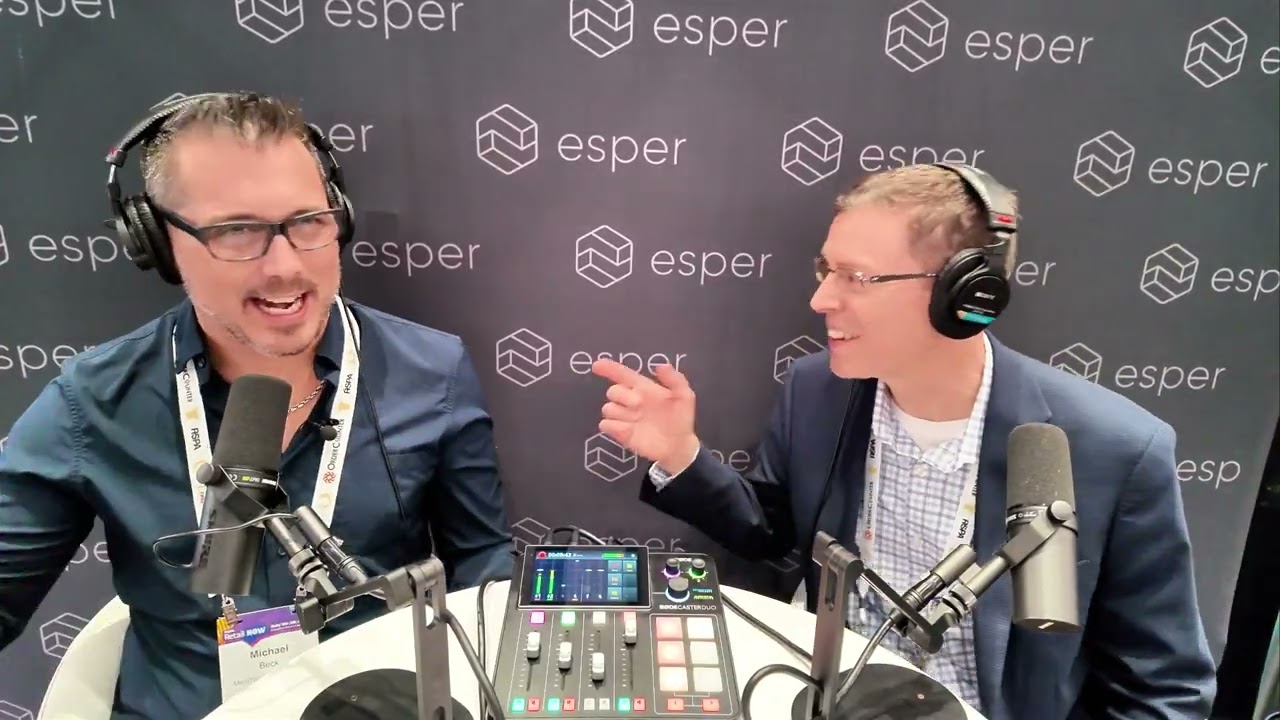
ChatGTM’s RetailNOW coverage was supported by Esper, as disclosed in the original interview.
Why would a sales event leave out the buyer?
A technology vendor arrives at a trade show and discovers that the merchants it ultimately wants to serve are not the audience. That could sound like a booking error. At RetailNOW, Jim Roddy explains, it is part of the design.
The RSPA CEO tells Beck that this is a gathering for the channel: the businesses that build, sell and support retail technology. A conversation with one of those businesses can open a relationship with a company serving many merchants. It also creates room to discuss the operating concerns of technology providers themselves, from recurring revenue to preparing a business for an eventual sale.
Those conversations need their own setting. A restaurant operator has little reason to spend a conference session improving a reseller’s business model. The reseller, however, has every reason to understand how to build a sustainable company that serves that operator well. Roddy’s explanation makes the event’s purpose much clearer than a generic promise of networking opportunities.
The shared interest is delivering more value
Roddy describes conversations with large solution providers who were comfortable welcoming capable competitors into the community. Their concern was whether those companies contributed meaningful value. A business that merely moves a box adds something different from one that helps a merchant choose, implement and operate a useful solution.
That shared interest helps explain the collaboration Beck notices on the floor. The companies still compete for business. They also benefit from a channel that earns a reputation for solving problems well. Sharing knowledge can strengthen the standard of service customers associate with the whole model.
The distinction is practical for any prospective member. An introduction is more useful when you can explain what you contribute, which customers you understand and where you need help. Arriving with only a desire for leads asks the community to do all the work. Arriving with a specific capability and a specific question gives other members something to respond to.
Roddy repeatedly emphasizes that relationships develop over time. One conversation may begin the process; subsequent exchanges reveal whether there is a fit. That is a more realistic expectation for a partnership event than assuming every badge scan should behave like a purchase order.
A warm introduction contains information a directory cannot
The interview describes several ways members can participate beyond the annual show. Roddy discusses smaller communities that meet online around particular business needs, including growth for resellers and channel development for software companies. Those recurring conversations mean people can arrive at an event already knowing someone in the room.
He also explains the value of introductions made by people who understand the membership. A company’s public description may not reveal every market it serves, every partnership it is exploring or every capability it is developing. Someone who knows that company can recognize a useful connection that a simple directory search would miss.
At the time of the interview, Roddy describes plans for a more detailed solutions finder, with information such as geographic coverage and the types of customers members serve. That is a plan discussed in the recording, not a claim here that a particular tool has since launched. The idea behind it is durable: better partner information makes it easier to find a relevant match.
The lesson for a business seeking help is to be precise. Describe the customer, the geography, the technical requirement and the support gap. Asking who can help with that situation is likely to produce a better introduction than asking whether anyone knows a good partner.
Working together gives a relationship somewhere to go
Roddy draws a useful distinction between meeting someone and working on something together. In his description of RSPA Inspire, participants hear an idea, receive an assignment, discuss it at their tables and share what they learned. The conversation has a task attached to it. People get to observe how others think.
That format turns education into a relationship-building activity. A person who helps clarify a difficult problem becomes easier to remember than a name exchanged during a crowded reception. The experience also gives both sides a reason to continue talking later.
Roddy’s own route into the industry began with an inexpensive office for a sports magazine. A technology publisher happened to be down the hall. That proximity eventually led him into the business and the community he now helps lead. He credits chance with opening the door, but his explanation of why he stayed is about the people and the sense of belonging.
For a business owner evaluating an association, that suggests a useful test. Look beyond the annual event and ask what repeated participation makes possible. Can you learn something relevant, contribute experience, meet a well-matched partner and work through a real problem? The value of belonging becomes easier to see when it shows up in those ordinary, useful actions.

