
Membership begins after the payment clears
An association membership can become one more renewal in a restaurant’s inbox. There is a logo available to download, a newsletter waiting to be read and a vague feeling that joining was probably a good idea. Meanwhile, the operator goes back to solving the same problems alone.
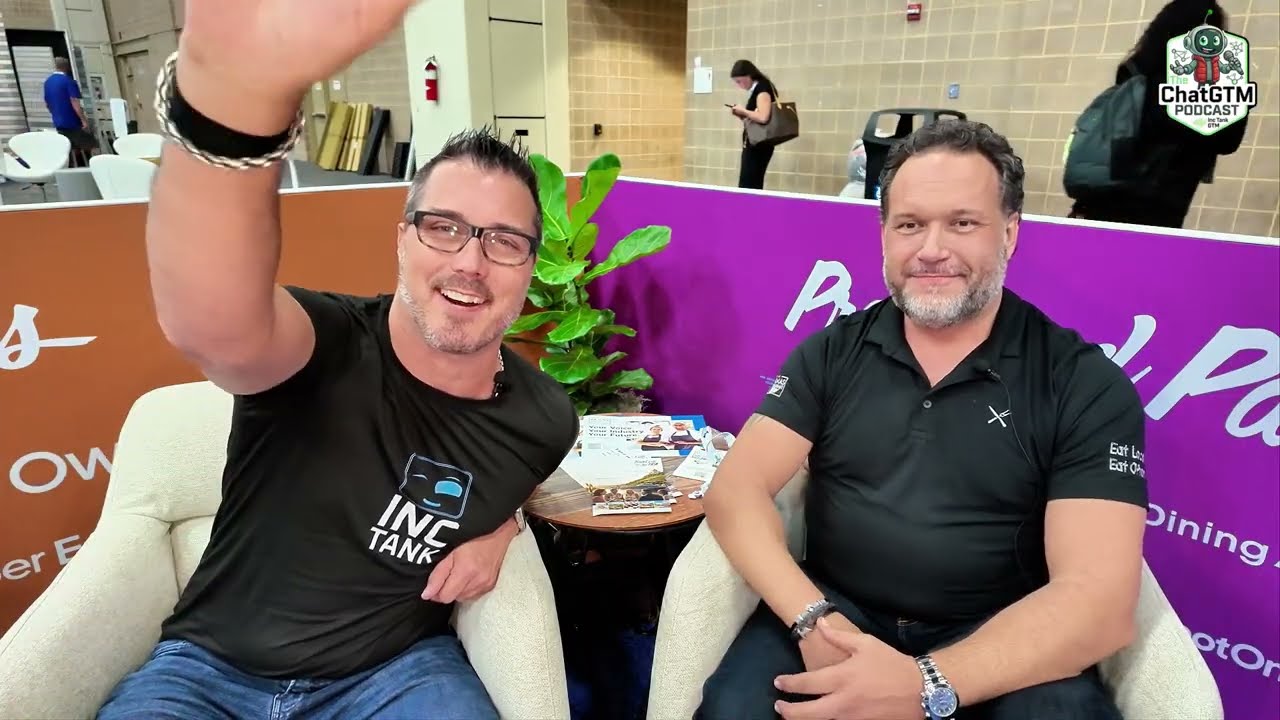
Joe Monastero’s advice at the Texas Restaurant Show is more active. The Texas Restaurant Association’s chief revenue officer tells Beck that joining should be followed by getting involved: learning which resources exist, meeting the local community and telling the organization what the business needs.
That distinction runs through their conversation in San Antonio. The show is a visible gathering of suppliers, operators and ideas, but Monastero describes it as one expression of work that continues throughout the year. The value becomes clearer when an operator connects a specific need to a person or resource that can help.
Start with the problem keeping you up at night
Monastero describes a range of support, from training and educational resources to partner offerings and advocacy. Independent operators may lack the buying power or internal resources of a large restaurant company. An association can help them discover options they might otherwise have to find and evaluate on their own.
He describes asking attendees what is bothering them most and what keeps them awake. Those answers help the team understand where to focus next, including whether another type of partner would be useful. It is a simple feedback mechanism with an important implication: the organization needs to hear the operating problem before it can respond to it.
For a member, that suggests a better first conversation than asking for a general tour of benefits. Explain where the restaurant is losing time, encountering uncertainty or struggling to find a dependable resource. Then ask which existing support fits that situation. Specificity gives the membership team something useful to work with.
The interview does not establish a standard financial return from joining or guarantee that any particular discount will cover the membership cost. The practical opportunity is to compare relevant resources with the needs of the business and then actually use them. An unopened benefits page has a fairly predictable return.
Use technology to give attention back
The discussion of AI stays close to restaurant work. Monastero talks about tools that can answer calls or reduce time spent on repetitive tasks, leaving staff more available to customers. Beck connects that to work people find more fulfilling. The point is the use of the time recovered, rather than adopting technology simply because it is new.
Monastero also makes a useful observation about AI-generated material: it still needs review. A restaurant would not automatically publish every piece of work from a team member without checking it. A generated answer or draft deserves similar attention.
An operator can apply both ideas to a small trial. Choose one recurring task, define what a good outcome looks like and review the results before expanding the use. If a tool is supposed to improve guest communication, inspect the communication. If it is supposed to reduce administrative work, see whether the team is doing less of that work afterward.
Those are practical extensions of the conversation. The interview’s broader message is that technology should support the relationships at the center of hospitality, with people still responsible for the quality of the experience.
The restaurant is part of someone’s support system, too
As the conversation moves toward community, Monastero describes restaurants responding when their neighborhoods face a disaster. Operators help feed people and support first responders. They may need help themselves at the same time. The relationships built in ordinary weeks become valuable when an extraordinary week arrives.
He then recalls working in his family’s Chicago restaurant on September 11. The family kept the restaurant open. Regular customers gathered there, including people seeking company and reassurance. Later, guests came together in the lounge to watch the presidential address. People who had recognized one another across the dining room began introducing themselves.
It is a personal account of a restaurant providing something its menu could not describe. The space gave people a familiar place to be together during an uncertain moment. Monastero connects that memory to the larger role hospitality plays in people’s lives.
That is also a reason to build support around the people who run those spaces. Local chapter gatherings, educational sessions and conversations with other operators can seem easy to postpone when the business is busy. Monastero’s invitation is to participate anyway. A restaurant that provides community for everyone else should have a community it can turn to as well.

