
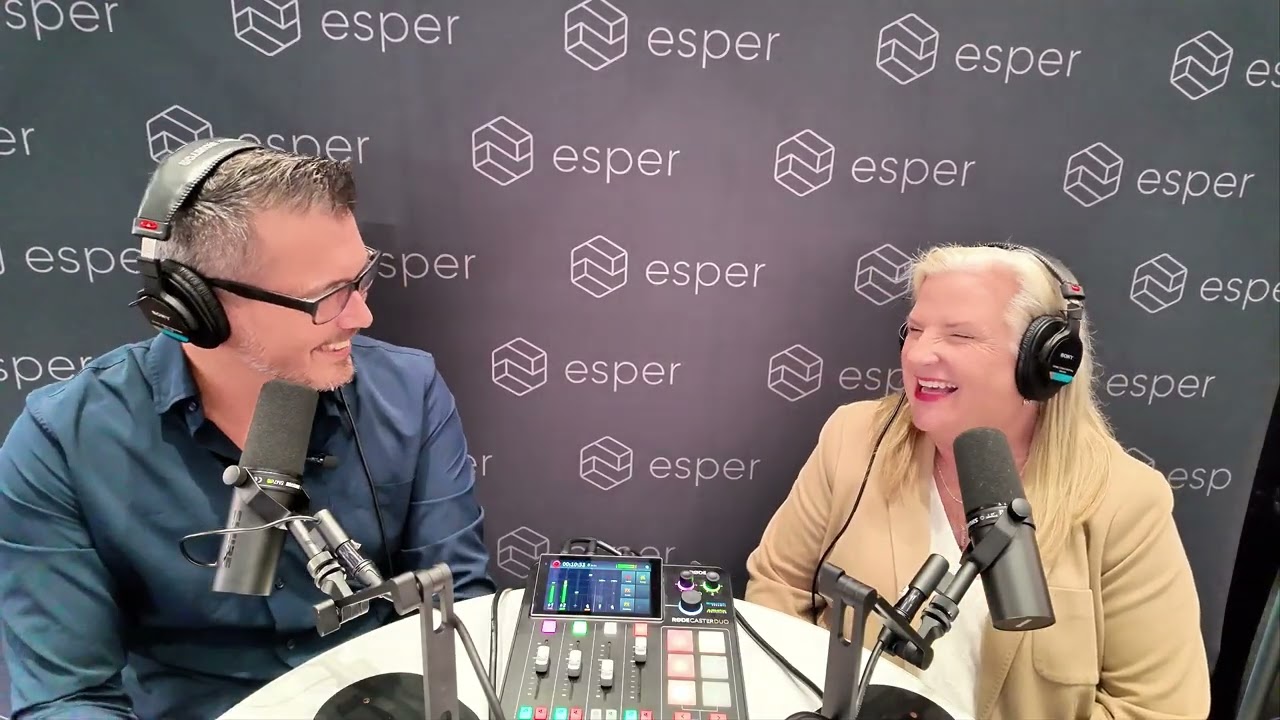
ChatGTM’s RetailNOW coverage was supported by Esper, as disclosed in the original interview.
The ingredient still needs a kitchen
A trade show can make technology look wonderfully self-contained. A screen lights up, a demonstration works, and someone points to the impressive thing it just did. What rarely fits on the display is the network of people required to turn that moment into a dependable product in somebody else’s business.
At RSPA RetailNOW in Las Vegas, Kathy Crumley explains Intel’s presence through those relationships. The company supplies a computing foundation, but its partners turn that foundation into devices, applications and services. Beck asks why Intel has increased its visible investment at the event. Her answer centers on supporting the people who bring the technology to market.
That distinction matters to a restaurant operator who has no interest in assembling a supplier ecosystem over the lunch rush. The operator needs a useful outcome. Getting there may involve a hardware manufacturer, a software company, an integrator and a support team. The quality of the connections between them becomes part of the product, even if it never appears on the packaging.
Crumley describes partners as a source of innovation as well as a route to customers. They understand particular applications and build around them. A strong platform gives those businesses something to work with; it does not remove the need for their judgment.
Ask what happens after the AI banner
AI is everywhere in the conversation, but Crumley quickly moves from its presence to its implementation. A booth can announce AI without explaining how a customer will use it. She asks what market problem the technology actually solves and how it will be delivered. Those questions are less glamorous than a demonstration and substantially more useful.
Her account of the builders community includes two connected paths: hardware systems and software applications. One business might embed computing into a kiosk or point-of-sale device. Another supplies the application that makes that device useful. Intel’s role, as she describes it, includes helping develop a commercial solution blueprint that explains the combined offering and its value.
For a buyer, the practical extension is to ask for the whole working arrangement. Who installs the solution? Who handles the application? What must already be in place? Who answers when the promised result does not arrive? These are editorial buying questions drawn from her emphasis on implementation, not a claim that any particular partner has failed to answer them.
A useful AI discussion should survive the removal of the letters AI. The remaining explanation ought to identify a task, a user and an observable improvement. If it cannot, the branding is doing more work than the proposed solution.
An out-of-order sign is part of the experience
The conversation becomes especially concrete when Crumley describes a kiosk with a paper notice taped over its screen. Customers encounter the failure as one broken service. They do not particularly care whether the problem lives in the computer, the card reader or another attached device.
She argues for management that reaches beyond the endpoint to its peripherals. Cameras, scanners and payment components all contribute to the service. Her example of insights into a card reader’s condition illustrates the ambition: understand a component’s likely maintenance needs before the customer discovers them through a failed transaction.
This is a description of the capability she is advocating, not a universal promise that every connected device predicts its remaining life. Operators still need to establish which components a proposed solution can observe, what information it returns and what action follows an alert.
Beck connects that visibility to budgeting. The useful management question is whether information arrives early enough to plan a replacement instead of reacting to an outage. A dashboard full of warnings is only the beginning. Someone needs responsibility, replacement equipment and a workable response process.
Leave room for the partner
Crumley also draws a boundary around Intel’s role. She describes a supportive position behind partners, helping educate the market and supporting their route to customers rather than stepping between them and their relationships. She points to another useful contribution: introducing partners whose product gaps might be addressed by working together.
That is a more practical definition of an ecosystem than a page of logos. The value appears when a missing capability finds an owner, an implementation problem finds expertise, or two companies can deliver something neither could provide alone.
For hospitality leaders, the interview offers a way to evaluate technology without becoming distracted by its most famous ingredient. Ask how the participating businesses work together, how the installation will be supported and how the service stays healthy. A good foundation matters. So does everything built on it.

