
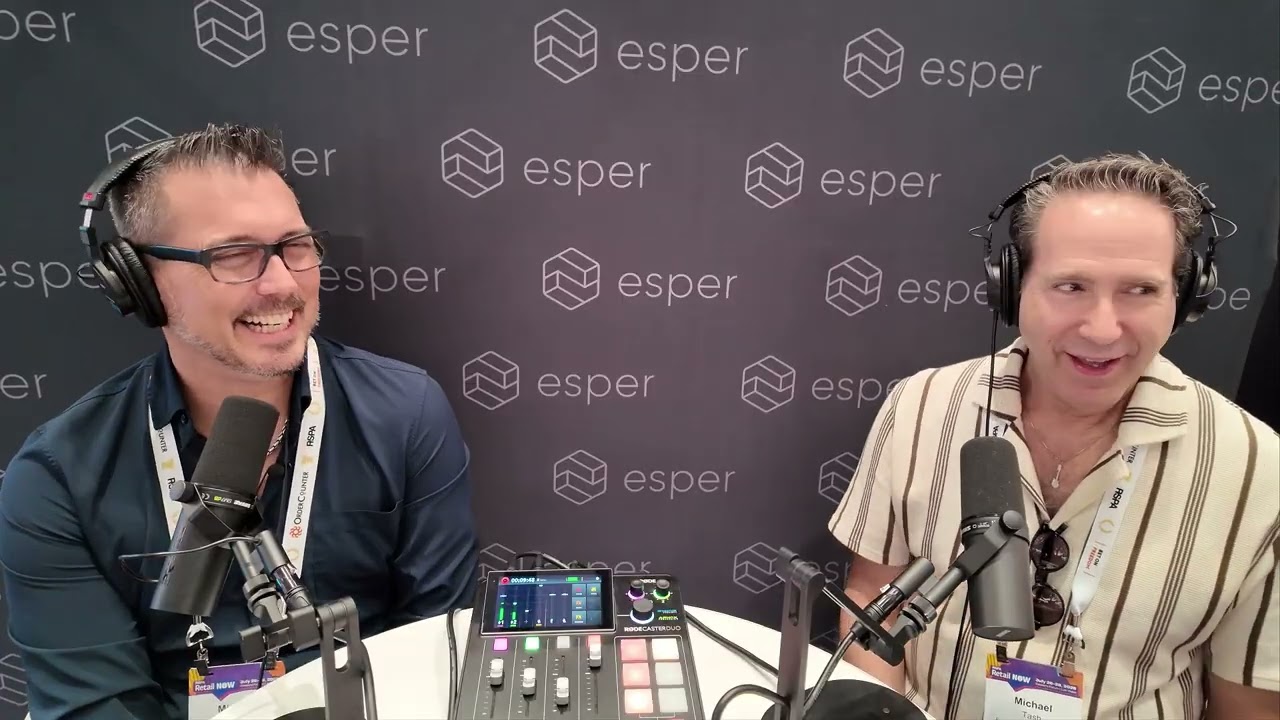
ChatGTM’s RetailNOW coverage was supported by Esper, as disclosed in the original interview.
Someone still has to meet the equipment
A restaurant group can spend years selecting technology and then want it installed everywhere immediately. Michael Tash recognizes the pattern. The decision finally lands, urgency arrives, and somebody has to turn a signed agreement into working systems across actual locations.
At RSPA RetailNOW, the Essential Systems Solutions co-owner explains a part of the industry that rarely gets the spotlight. His company sells point-of-sale systems in its region, but it also handles installation work for other providers. The selling company may have the product and the customer relationship without the field team needed for a large rollout.
Tash describes equipment arriving at the ESS warehouse, where it is staged, tested and programmed before shipping. Installers then meet it on site. Depending on the assignment, the work can include training or support during the transition. The scope varies, but the sequence makes an important point: installation begins before anyone walks into the restaurant.
For an operator, that sequence is worth understanding early. A purchase proposal should make clear who prepares the system, who arrives at each location and who helps the team use it. Otherwise, the most visible part of the project may begin with an avoidable question: who was supposed to handle this?
The person behind the service business
Beck first introduces Tash through a different kind of performance. He remembers seeing a familiar industry face playing guitar at Buddy Guy’s Legends in Chicago. Their conversation moves through Tash’s long involvement in music before returning to his technology business. It is a reminder that an industry contact often has a life far beyond the badge.
Tash’s route into POS was equally human and indirect. He describes working at a video store that had a relationship with a VCR repair company. That repair company also worked with McDonald’s training equipment and was asked about installing and servicing POS systems. When the video-store job ended, the connection helped open a different career.
He says he began installing restaurant systems in 1989 and found he was particularly good at building relationships. The work expanded, and he and business partner Jason Thompson took ownership of ESS in 2011. Those details come from his account of the company’s history, not a suggestion that there is one prescribed path into technology.
The useful connection is between competence and trust. Someone has to perform the work, but someone also has to understand the customer, explain what will happen and sustain the relationship. Tash’s story gives those less visible skills their proper place beside the equipment.
Competitors can become the installation team
ESS sometimes works under another company’s identity. Tash jokes about changing the name on the shirt to fit the assignment. The point is practical: a provider can retain its customer-facing relationship while using a specialist to deliver the installation.
That helps explain why he values RetailNOW. A company can compete with another business in one situation and work alongside it in another. Tash describes conversations that help him discover new technology, learn from peers and meet organizations whose deployment needs fit his team’s capabilities.
For a technology provider, the implication is to be honest about the gap between selling at scale and installing at scale. Winning a large account does not automatically create geographic coverage or trained field capacity. An established partner can be part of the delivery plan, provided responsibilities and standards are agreed before the rollout becomes urgent.
For the restaurant, the logo on an installer’s shirt matters less than a coherent experience. It should be clear who owns the project and how issues move between participants. A partnership is most useful when the customer benefits from the combined capabilities without having to manage the handoffs personally.
The relationship is tested when something stops working
Tash draws a distinction between an ordinary product problem and a mistake in a system a business relies on to trade. A menu configuration or payment detail can have immediate consequences. That makes support and accountability part of the purchase, rather than a separate conversation to postpone until something breaks.
He and Beck agree that automation does not remove the need for a person who will take ownership of a problem. The practical buying question is not whether a provider sounds friendly. It is whether the support arrangement identifies who responds, what information they need and how the operation gets help when time matters.
Tash also describes a responsibility to share knowledge with others in the channel. People helped him and his business without demanding something in return; he wants to carry that behavior forward. Advice is useful, he observes, but someone still has to do the work.
That is the thread connecting the conversation’s music, relationships and installations. Good intentions need execution. The customer may never see the staging bench or the partner agreement, but the care taken there becomes visible when the system arrives and the team is ready to serve.

