
Hospitality has an interruption problem
Randall Hom describes carrying the restaurant phone in his back pocket while moving between kitchen work, the expediter station and dishes. The same questions kept arriving. So did the worry that an unanswered call might mean a lost reservation, takeout order or private event.
It is a recognizable restaurant problem: the people responsible for the guests in the building are also expected to be available to everyone trying to reach the building. The phone does not consult the seating chart before ringing.
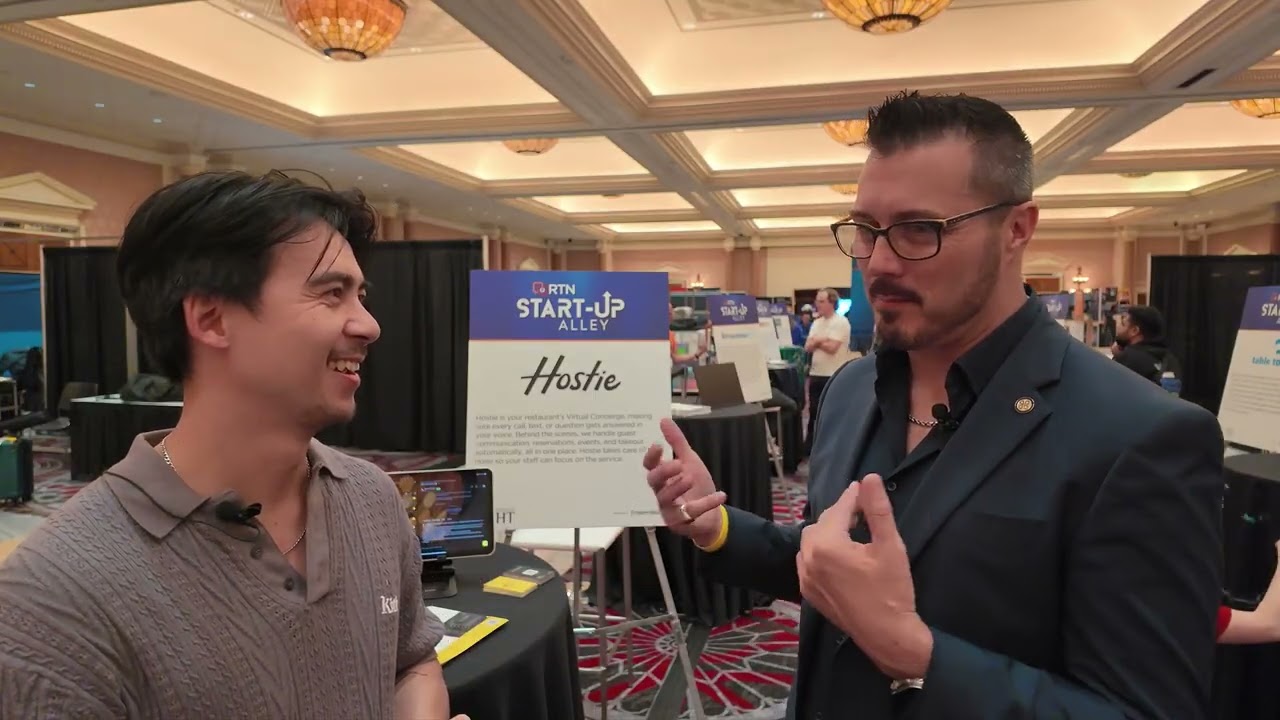
Speaking with Beck in MURTEC’s Startup Alley, the Hostie co-founder and CEO traces the company’s idea to that experience at Back to Back in San Francisco. The restaurant, with its wood-fired pizza, natural wine and vinyl soundtrack, was built around a particular atmosphere. Repeated interruptions made it harder to give that experience the attention it deserved.
Hom’s starting question was whether generative AI could help operators spend more time with their guests. That makes the conversation about the design of hospitality work as much as the design of a voice interface.
A useful answer depends on knowing the restaurant
Hom describes Hostie as a virtual concierge that handles guest communications. In this recording, he discusses calls and texts, with email described as forthcoming. The distinction matters: a conversation about a product captures it at a moment in its development, and the company’s current site is the place to confirm today’s capabilities.
The onboarding work he describes includes understanding a restaurant’s brand and operating constraints. A booking for two people may follow a different path from a request for ten. Some restaurants take orders or private-event inquiries; others need a different arrangement. Those details shape what the assistant should do.
That is where a buyer can move beyond being impressed by a natural-sounding response. The more useful question is whether the system understands the situations the restaurant actually handles. A pleasant voice answering with the wrong policy is still giving the wrong answer, just with better manners.
A practical evaluation could start with the questions the host team hears most often and the exceptions that regularly need a manager. Walk through those cases during setup. Check the action taken, the information retained and the point at which a person should become involved. This is an editorial application of Hom’s explanation, rather than a checklist he prescribes in the interview.
The handoff is part of the experience
One of the capabilities Hom is particularly enthusiastic about is the operator app. He describes conversation summaries and text notifications that let the restaurant see important exchanges. Staff can then respond to the guest by text, continuing the conversation without starting again from nothing.
That gives the human team a role beyond answering every incoming call. An initial exchange can collect useful context, while an operator focuses attention on the conversations that need it. The guest should not have to experience the technology as a series of disconnected departments.
Hom also discusses associating guest information with a phone number and making relevant history available at the restaurant’s discretion. His emphasis is on helping the front of house recognize people and understand their interactions. The article does not establish the precise data or configuration available in every restaurant deployment; those details belong in a direct discussion with the provider.
For a team considering the approach, follow one inquiry all the way through. Where does it arrive? Who notices it? How does that person reply? Does the reservation, order or event request reach the place where staff can act on it? A smooth first answer is only one part of a completed guest interaction.
Measure the conversation from the guest’s side
Hom says the company reviews guest sentiment and uses conversations to identify opportunities to improve. He also says the interaction is disclosed to callers. Those details point toward a more useful standard than simply measuring whether the phone was answered.
An operator can ask whether the guest understood the response, reached the intended outcome and knew how to get further help. A high volume of handled calls would mean little if the host team had to repair the same misunderstandings afterward. The interview includes company-reported adoption and automation figures, but does not supply an independent assessment of those outcomes.
The strongest idea in Hom’s account is the connection back to the restaurant floor. Technology earns its place when the whole interaction improves: the person calling gets useful help, the team has the context it needs and the operator can return attention to the guests already there. The phone in the back pocket was the symptom. Better use of the team’s attention is the goal.

