
A connector list is the beginning of the conversation
Somewhere in a restaurant technology sales conversation, someone says the systems integrate. Everyone relaxes a little. The slide has the right logos, the checklist gets another tick and the meeting moves on. The difficult questions have a habit of waiting until implementation.
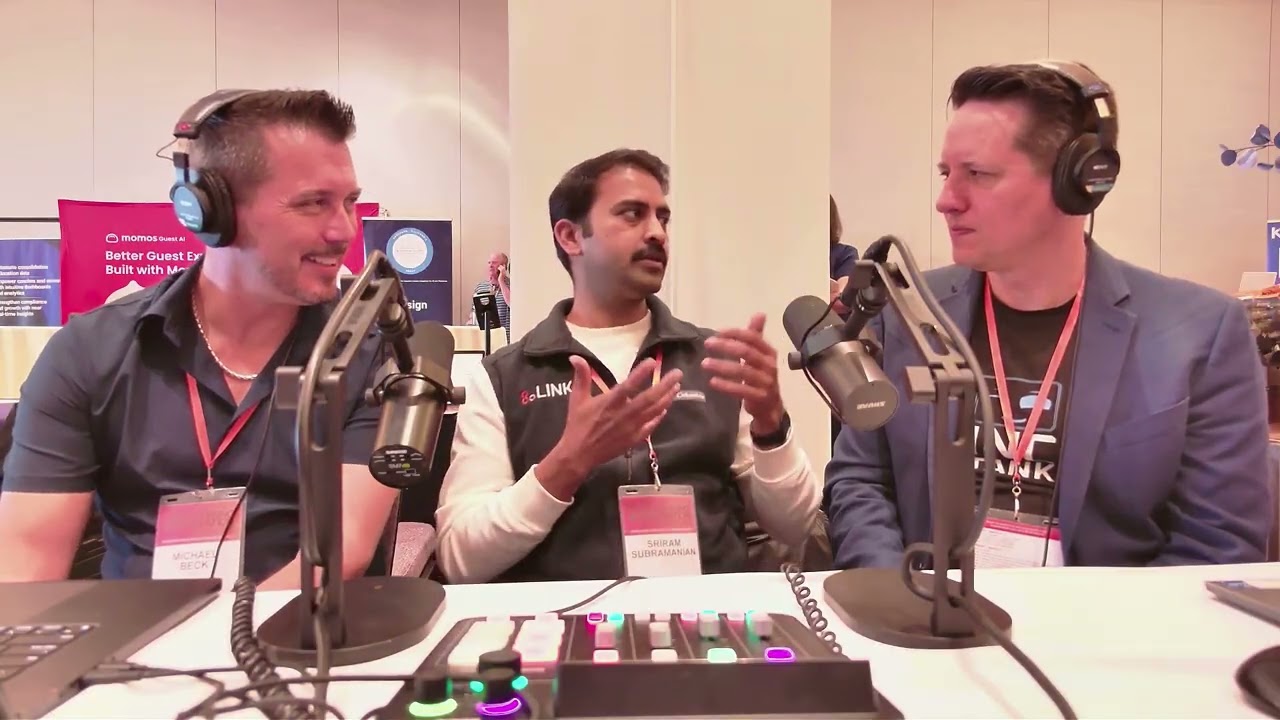
At the Restaurant Franchising Innovation Summit, LinkToAny founder and CEO Sriram Subramanian tells Beck and Chad why that familiar assurance can carry more complexity than it appears to. Different operators have different environments. More applications create more relationships to manage. Security requirements and custom workflows shape what a successful connection actually means.
A vendor may genuinely have a connector and still need substantial work to support a particular use case. Subramanian’s argument is that the business needs to understand the workflow behind the claim. Which data moves, where it goes and how it is maintained will matter long after the sales presentation closes.
The delay shows up in someone else’s pipeline
Subramanian describes LinkToAny’s work in terms of filling gaps between platforms and applications. He says the company does not seek to replace integrations that already work well. The opportunity appears when a missing connection prevents a useful solution from reaching the customer.
That makes integration work a commercial concern. Sales teams may avoid an opportunity because they believe a required connection cannot be supported. Onboarding teams may have a customer ready to move forward while the technical dependencies remain unresolved. Product engineers, meanwhile, have a core product and a finite amount of time.
He recounts one engagement that began after an industry event, when a platform needed a complex connection ahead of an important customer presentation. According to Subramanian, his team received API access and produced an initial version within two and a half days, leaving time for testing. He says the platform won the deal and that subsequent releases improved the solution.
That is a guest-reported example, not a delivery promise for every integration. Its useful feature is the sequence: access, a defined need, an initial implementation, testing and continued improvement. Speed depended on more than a confident answer to whether the companies could work together.
Getting connected creates an ongoing responsibility
Beck raises the question that is easy to miss during a successful launch: what happens when something changes? A connection can work today and encounter a different endpoint, format or behavior tomorrow. The work continues after the first successful exchange.
Subramanian describes automated tests that check endpoints and help his team detect changes. He also discusses updating code and informing customers when an issue occurs. These are the operating practices he describes in the interview, rather than a verified service-level commitment for a specific customer.
For an operator evaluating a proposal, the practical next step is to ask who owns the integration over its lifetime. Who monitors it? Who investigates a failed transaction? Who communicates with the other platform? Which maintenance work is included, and what would require a separate engagement? Those questions make the responsibility visible before a problem makes it urgent.
The conversation also touches on data quality. Moving information into another system does not make the information useful by itself. Subramanian discusses cleansing and governing data so that downstream results make sense, including when AI tools depend on that input. A technically successful transfer can still carry a business problem from one application to the next.
Give the sales team a route to a real answer
One of Subramanian’s more revealing observations concerns who benefits from the engineering work. He initially thought of engineers and product managers as the customer. Over time, the daily pressure facing sales and onboarding teams became clearer. They needed answers about feasibility, timing and cost while a live opportunity was still on the table.
He describes shared communication channels that bring those questions closer to the technical people who can address them. The value is a more direct way to assess the requirement, rather than forcing a salesperson to choose between an unsupported promise and an automatic no.
A useful application is to capture the workflow early in discovery. Ask which systems are involved, what the customer needs to happen between them and what will be blocked if it does not. Then bring the right technical people into that discussion before the proposal depends on an assumption.
Subramanian traces his motivation partly to the frustration of seeing nearly completed products held back by dependencies. The restaurant version of that frustration is familiar: a solution can be appealing, funded and nearly ready while one unfinished connection keeps the operation waiting. Making that dependency explicit is an important part of getting the promised value into use.

