A prediction is not yet a result
A forecast can look excellent on a dashboard while the kitchen carries on exactly as before. That is an awkward situation for software sold on its ability to improve operations. The prediction may be clever; the business still needs something to change.
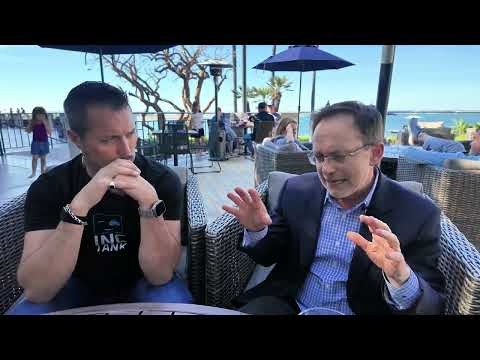
At the Restaurant Franchising Innovation Summit, Brett Berger of SynergySuite joins Beck and Chad to discuss the connection between forecasting, purchasing and adoption. His emphasis is on evidence of value, rather than simply telling restaurant teams that their lives will become easier.
Berger describes SynergySuite as a consolidated back-of-house platform focused on prime costs. In this conversation, purchasing provides the clearest example of how a more detailed forecast could inform an operating decision.
The useful question for a buyer is not just whether the system produces a forecast. It is whether that forecast reaches the person making the decision, whether they understand it and whether acting on it improves the outcome that matters to the restaurant.
Start with the ingredients, not just the sales total
Berger contrasts a weighted sales forecast with the ingredient-level forecasting approach he describes at SynergySuite. Rather than starting and ending with an overall sales expectation, the system models the items the operation needs to purchase and use.
He discusses accounting for variables such as weather and events, and updating expectations as conditions change. The operational appeal is straightforward: a total sales number does not, by itself, tell a kitchen what to order or prepare.
The interview also highlights the importance of the measurement window. A forecast evaluated over an entire week can conceal differences within individual hours or service periods. Those shorter periods may be where a restaurant feels the consequences of getting demand wrong.
For an operator comparing tools, that suggests asking vendors to show the level at which their accuracy is measured and how the output connects to purchasing. A percentage without its time period, scope and method is difficult to evaluate. A demonstration tied to actual operating decisions gives the number meaning.
Adoption belongs in the measurement
Berger describes comparing outcomes within a brand across different levels of system use. The point is to understand whether the operation is engaging with the tools, rather than assuming that a software subscription means a new process has taken hold.
He offers a precise savings figure for one brand during the interview. That example is a vendor-reported result, not an independently audited finding or a promise for another restaurant. The more transferable idea is to connect usage with outcomes and investigate the difference.
Even then, comparison requires care. Locations may differ in volume, staffing, management and other conditions. A useful evaluation needs an agreed baseline and a clear explanation of what changed. Otherwise, a favorable result can be easier to celebrate than to understand.
For franchise systems, adoption is also a communication challenge. Berger talks about explaining value in terms that matter to the operator. A tool has a better chance of being used when the person responsible understands which problem it solves and how that improvement will be assessed.
Bring the forecast into the next decision
The conversation moves from purchasing into production and scheduling. Berger describes applying forecasting to shorter production intervals, including preparation and cooking decisions. The ambition is to make the same understanding of demand useful across several parts of the operation.
He also discusses a conversational interface being developed at the time of the recording. That is a direction he describes, not a claim here that every discussed capability is available in every current configuration. Buyers should confirm what is live and suitable for their requirements.
The final theme is cooperation between technology providers. Berger sees integration becoming more important as companies work to support a coherent operating environment. That matters because a restaurant’s useful data rarely arrives neatly inside one product.
The interview leaves us with a practical standard for evaluating AI in restaurant operations. Follow it from the input to the forecast, from the forecast to the decision, and from the decision to the measured result. The most impressive output is not necessarily the most useful one. It is the one the team can understand and use to do the work better.