
Everyone likes the beginning and the ending
The beginning of a technology initiative is full of possibility. The ending, if it goes well, produces a success story. Between those two moments sits the part where people have to change how they work, accept responsibility and discover what the presentation left out.
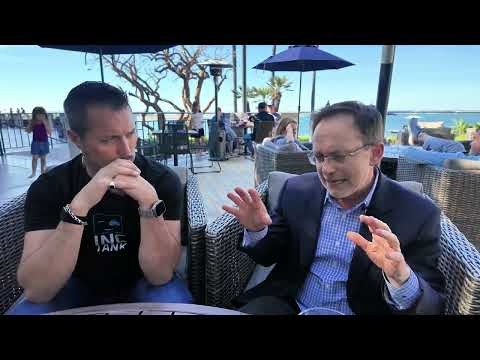
At the Restaurant Franchising Innovation Summit, Craig Miller joins Beck to discuss that middle. Miller co-authored Bricks and Clicks: How We Drove Sonic into the Digital Age with former Sonic CEO Clifford Hudson. Their experience provides the central example in this conversation.
Miller describes a familiar organizational problem. Leaders can agree with a strategy without agreeing to own its execution. A technology team can install the tools, but the value still depends on marketing, operators and other functions changing their processes.
For Miller, that makes the work broader than a technology project. The question is whether the people expected to use the new capability see themselves as responsible for making it succeed.
Permission to work through the difficulty
Miller recalls Hudson recognizing friction between the technology team and other parts of the organization. The response was to bring the difficulty into a leadership discussion rather than treat it as a problem that IT should quietly resolve.
In Miller’s account, a leadership offsite centered on the messy middle. Hudson acknowledged that there would be mistakes and offered support while making clear that the business needed to move forward together. Shared ownership was not an optional extra after installation.
That combination matters. Permission to encounter problems is different from permission to avoid accountability. Miller describes a leader making room to identify and resolve the obstacles without pretending that a complicated change would be painless.
The practical lesson for another executive team is to ask who must behave differently for the investment to deliver value. Those people need a role in the plan, a way to raise problems and a reason to commit. Sending them a launch announcement is unlikely to cover all three.
Explain the plumbing before selling the new rooms
There was also an external audience to bring along. Miller remembers questions about capital spending and when investors would see a return. Before new capabilities could be added, the company had to stabilize parts of its existing technology.
He used an old-house analogy: adding modern conveniences requires plumbing and wiring capable of supporting them. It gave Hudson a way to explain work that was necessary but less visible than the experience everyone hoped to build.
The analogy did not remove the need for results. Miller describes staging the work so stakeholders could see incremental value. Each milestone helped build confidence in the next step rather than asking the organization to wait indefinitely for a large payoff.
For a team making its own case, that suggests two responsibilities. Explain why the foundation needs attention, and show how progress will be recognized. A compelling destination becomes more credible when people can see the route and evidence that the first steps are working.
Start with the customer, keep ownership inside
Miller’s starting point is the customer and the business model. He wants to understand how the organization earns sales and profit before discussing which technology to buy. Customer preferences, competitors and technical possibilities change; the business needs a way to keep adapting.
He also warns against evaluating a saving without considering its effects elsewhere. In an example from another company, outsourcing support reduced a visible expense but, in his account, created costly operational disruption. The lesson does not require treating that anecdote as a universal argument against outsourcing. It requires examining the whole consequence.
The same reasoning informs his approach to partners. Miller describes retaining leadership, architectural understanding and project ownership inside the business while using outside capacity where it helps. Someone within the organization must remain able to make informed decisions.
His closing advice returns to a clear path and early proof. Establish where the business needs to go, why it matters to customers and how the first changes will demonstrate value. The messy middle will still be there. A team that owns the work together has a much better way to navigate it.

